%20copy.webp)
Installation Showcase: Packaging Line at Sam Miranda
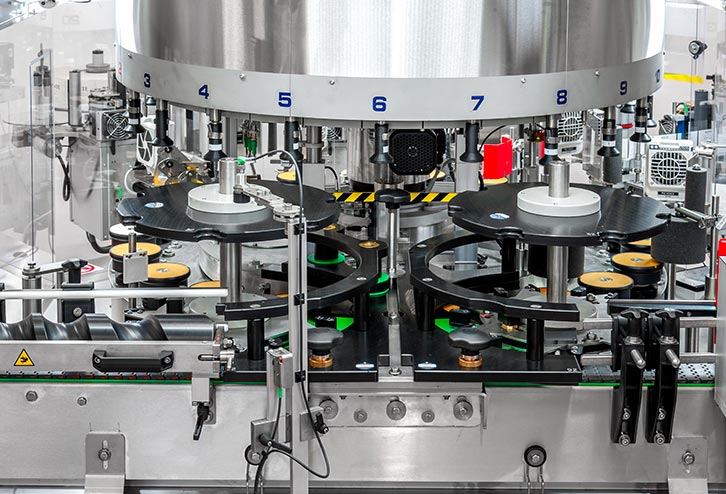
Our technical team recently installed and commissioned a bottling and labelling line at Sam Miranda, pairing a high speed Borelli monoblock with an STS rotary labeller.
Sizing a canning line is one of the most consequential equipment decisions a brewery makes. Get it right and you've got headroom to grow without re-investing prematurely. Get it wrong and you're either bottlenecked by a line that can't keep up with demand, or carrying the cost of capacity you don't use. This guide walks through the factors that actually determines the right size line, not just cans per minute on a spec sheet.
The most common sizing mistake is designing a line around where you want to be in five years, rather than where you are now plus realistic near-term growth.
Work out:
From there, you can calculate the throughput (cans per minute) your line actually needs to clear a batch within your available packaging window, not the maximum throughput a line could theoretically achieve.
A canning line that outpaces your brewhouse just sits idle for most of the week. A line that can't keep up with your brewhouse becomes the constraint on your entire production capacity.
The goal is a canning line that comfortably clears your batch size within your packaging day, with some buffer for changeovers, cleaning and unplanned downtime - not a line sized for a hypothetical future brewhouse expansion you haven't committed to yet. As a general guide:
These bands are starting points, not rules. Your actual sizing should be calculated from batch volume and packaging window, not read off a chart.
A canning line is only as fast as its slowest stage. Sizing the filler correctly doesn't help if your seamer, labeller or conveyor system can't match that throughput. Work through each stage:
It's reasonable to size a line with some growth capacity built in. It's a different thing to size a line for growth that's still speculative. A practical approach would be to size for your production volume 18-24 months out, based on actual sales trajectory and committed expansion plans, not best case projections. Most well-built canning lines can also be incrementally upgraded later - additional fill heads, upgraded seamers, added labelling capacity - so you're not locked into a single configuration forever.
If you run multiple can sizes or pack formats, factor changeover time and tooling cost into your sizing decision. A line that's fractionally faster on paper but takes an hour longer to changeover between SKU's may cost you more in practice than a slightly slower line with quick-change tooling.
Canning line budgets are often built around the filler and seamer, with labelling, conveying and quality control equipment treated as an afterthought. Price the full line before committing, so you're not caught short mid-installation.
The right canning line sits at the intersection of your current production volume, your packaging window, your realistic growth trajectory and your budget across the entire line. Q-Pack works with breweries across Australia and New Zealand to size canning lines around actual production data, with equipment sourced from established partners including Matrix SRL. If you're scoping a new line or evaluating whether your current setup still fits your production volume, our team can walk through the numbers with you before you commit to a configuration. Click here for more information on our canning range.